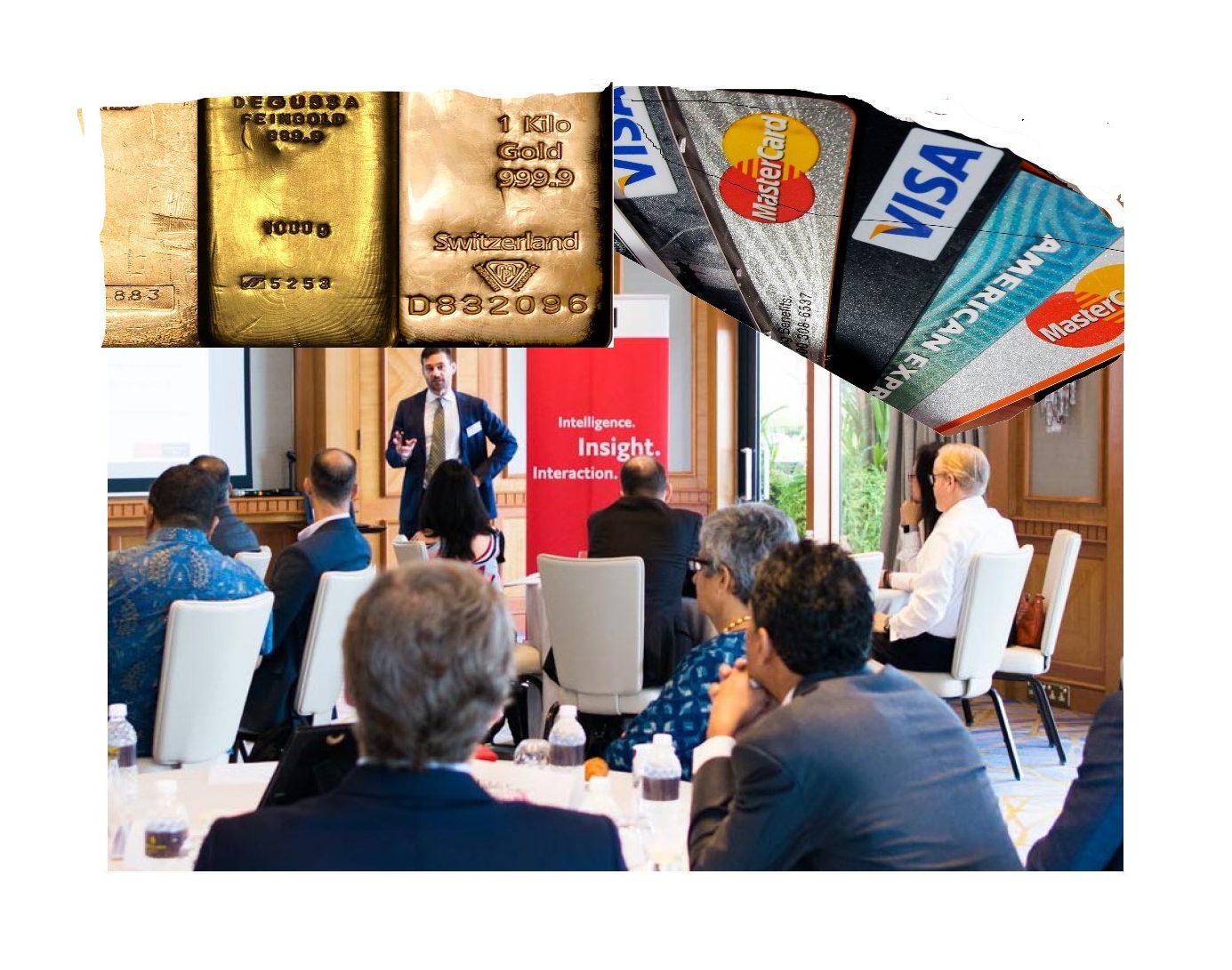
Economics is not about money ?!?
Most people think that economics is about money. However, economists take a different view. The most common definition of economics does not mention money at all. Instead it concentrates on scarcity and resources.
The key economic problem for society is how to resolve the conflict between people’s virtually limitless desires for goods and services and the scarcity of resources. 1
Most economics text books do not mention money until the last few chapters2 . The most elegant and the commonly used economic models of the economy are based on a barter economy and do not include money 3, 4. This is “Real Analysis” which forms the basis of most current economics.
“Real Analysis proceeds from the principle that all the essential phenomena of economic life are capable of being described in terms of goods and services……..Money enters the picture only in the modest role of a technical device……to facilitate transactions.” 5
Conventional and classical economics emphasise the universal value of money, particularly its relationship to gold. They follow Adam Smith who envisaged money as a standard amount of gold certified by the state. (Adam Smith’s money). If money is a standardised form of gold, then it behaves just like any other commodity. This is the source of the conventional view that economics is a study of resources, commodities and the demand for them. Politics and power take second place.
Two aspects of money
However money is more complex than Smith thought. There are two elements to the value of money.
- Money has both a universal value (derived from precious metals, or more recently the U.S. dollar)
- It is also an exchange token authorised and backed by a particular state (or other authority – note). This gives the state, or its approved agencies, a unique source of power.
The two elements of money co-exist and support eachother but they are often treated as separate and distinct.
During the 300 years since Adam Smith wrote, money has become steadily less connected with precious metals and become more dependent on credit. At the same time, the state has taken an increasing role in regulating credit creation. So money is now primarily a state-authorised token based on credit. Money today is no longer directly related to gold. It is often no more than a number in an accounting system. Nowadays, money can be created with a few keystrokes on a computer keyboard.
95% of money today is created as loans by financial agencies through making loans 6. Authorised lenders, such as banks, can create money with ease. This creates a totally different situation, in which certain economic agents (lenders) have a disproportionate share of power. There is a fundamental inequality in access to money. Money is more easily available for profit- making enterprises approved by banks.
Money creation defines the nature of our economy and means that economics needs to incorporate a much greater recognition of the power resulting from the ability to make loans and create money. A more realistic view of new economics will be based on monetary analysis
” Monetary analysis introduces the element of money on the very ground floor of our analytic structure and abandons the idea that all essential features of economic life can be represented by a barter-economy model” 7 J.A. Schumpeter 1954
Money creation and exploitation
Loans go principally to enterprises that are profitable and secure. Enterprises are more profitable and lenders get more interest if all other costs are reduced as far as possible. This creates an incessant demand for cost-saving. It leads to an economy in which wages are minimised and resources are acquired for the least possible cost. Often this is less than the cost of replacement, so natural resources, like the Amazon forest are destroyed and people are paid starvation wages.
Adam Smith’s economics is out of date. We urgently need a new type of economics to guide us as we face the challenges of the 21st century. For more on this see here
Where next?
You can explore the history of Adam Smith’s money or go to the home page which includes an overview of the pages available. Page names without links indicate pages that are planned in the future. You can explore the link between Money and Exploitation. You can find more about A New Monetary and Economic System.
This website leaves me wanting to know more. It is clear to me that our current economic system takes no…

References
- Begg et al.
- For example: Begg et al
- King,M (2017) The End of Alchemy Abacus, London p78.
- The Arrow-Debreu model is the most elegant model. The most commonly used current model is the DSGE (Dynamic Stochastic General Equilibrium). They both have difficulty in accomodating money. (Hahn, F. (1985) Money, Growth and Stability Blackwell Oxford p31
- Schumpeter, J.A. (1986) History of economic analysis. Reprint der Ausg. Oxford 1954. Edited by E.B. Schumpeter. London: Allen & Unwin. p277
- See Ryan-Collins, J. ,Greenham T., Werner, R. and Jackson, A. (2011) Where does money come from? (New Economics Foundation:London) and McLeay, M, Radia, A. & Thomas, R (2014) Money Creation in the Modern Economy Bank of England Quarterly Review 2014 (1)
- Schumpeter Ibid. p
 Outgrowing Adam Smith
Leave a comment